Article for EP News, August 7, 2026
Hope for the Journey – The healing power of music
One of my very first tasks as the new Executive Director of EDDC was to hire a Program Director. I knew I would need help with the day-to-day planning of activities and program development. I was beyond thrilled when one of our board members introduced me to Basia Buczkiewicz. A local resident of Estes Park for a few years, Basia came to us with care giving expertise, yoga instruction, a wonderful corporate background and detailed programming experience. What soon became beautifully evident was her heart of compassion and her love of music. Basia hit the ground running to get us ready for our opening on May 4. She used such creativity and ingenuity in designing our (limited!) space (fondly called, “The Haven,”) to include connection, movement, art, rest time, and music. In a forthcoming article, I will focus on how Basia exceptionally developed key core components of our program, but for now, I want to share how vital and essential music is for a person experiencing dementia, and thus, a core part of our program.
Every single day, music is incorporated into our activities in some simple, yet powerful way. We use familiar playlists that bring back memories from all the way back to the Big Band era and up to the 70’s-90’s. We do a game called “sing that tune,” or “finish the lyric,” or “identify the artist.” We engage in movement to music by using musical instruments, shakers, and drums. And at least once a week, we have one of our amazing EDDC keyboard volunteers, Verlene or John, play while we all participate in a sing-along. We dance, we march, we waltz, sometimes we swing.
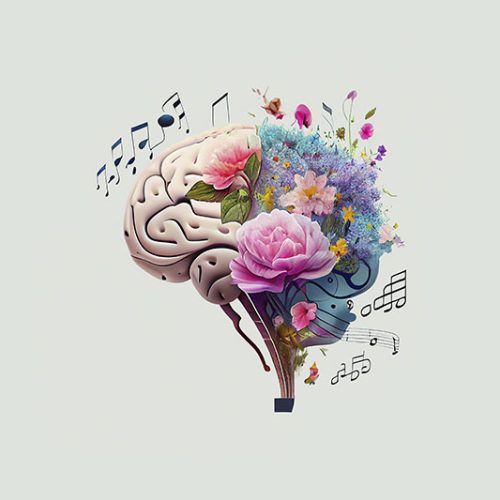
Music engages areas of the brain that are often preserved, allowing individuals to express themselves, experience joy, and connect with others in ways that words alone cannot. Scott Kaiser, MD, a geriatrician and Director of Geriatric Cognitive Health for the Pacific Neuroscience Institute, explains how “it is not uncommon for people living with Alzheimer’s disease or other types of dementia to remember music and songs even when they may forget many other names or words and otherwise have significant cognitive deficits.” Dr. Kaiser says, “There are many potential reasons for this – some of which have been clearly demonstrated in research and practice and others which we are only beginning to understand – including the fact that music may tap into many different regions, pathways and processes in our brains.” *
Other benefits of music include a boost in neuroplasticity, which may potentially in turn demonstrate improvements in hormone levels and immunity, as well as a reduction in anxiety, agitation, restlessness. And a bonus benefit, Dr. Kaiser points out, is that when these conditions improve for the person experiencing dementia, the quality of life improves not just for them but also for their care providers and families.
This week at “The Haven,” we had the privilege of having the Pinewood Clarinets perform for us. It was such a treat to have these six talented musicians in our space. We sang along, we marched, we danced, we shook our shakers, or we just listened, allowing the music to touch our soul. One of our guests, (we’ll call her Letty), joyfully sang to most of the songs. Letty has limited verbal expression but ohhh could she sing! My eyes filled with tears. My heart was full. I felt in my core that we had been a part of bringing about in a small way, an improvement in the quality of Letty’s life, just for today. Hope for the journey. Joy along the way.
*Quotes from Scott Kaiser, MD www.pacificneuroscienceinstitute.org/blog/brain-wellness-lifetyle